A Day in the Life of Americans
The Overall Story
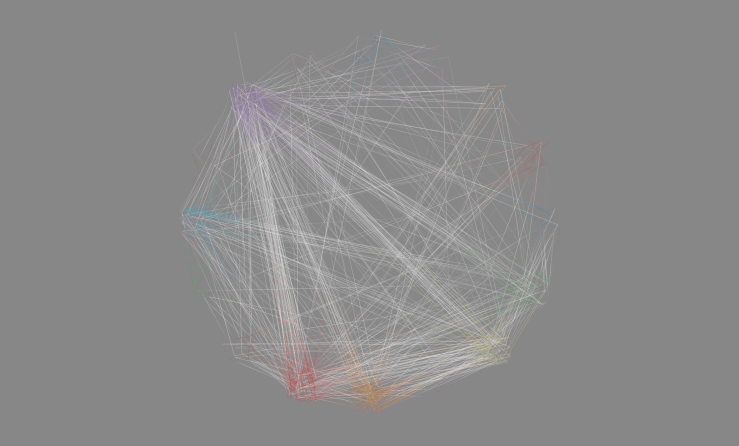
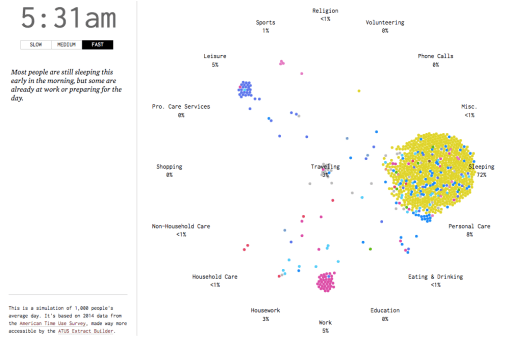
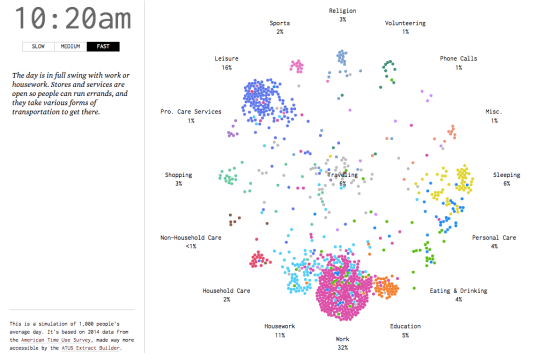
This visualisation follows one thousand Americans during a 24-hour period. This is achieved through dots representing each individual moving across different activity categories throughout the day. As every few hours pass viewers are able to see a shift in the majority of activities people partake in.
Audience Interactivity
Unfortunately the only interaction viewers have is changing the speed the graph moves between slow, medium, and fast. There is no option to pause or scroll through to a certain time period which increases the time taken for viewers to read the data they want to focus on.
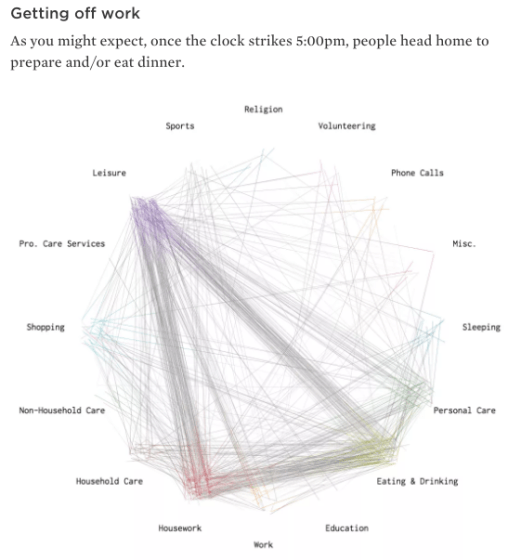
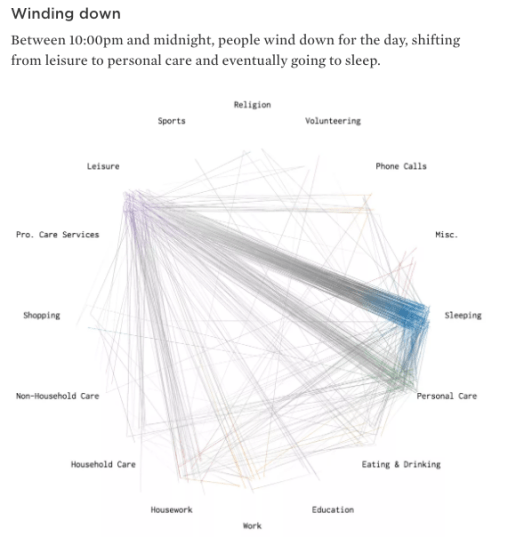
With the different types of activities shown on the graph, viewers are able to interpret how people spend their time in contrast to their own. The creator of the graph himself drew lines tracing movements of each dot, analysing the most common activities partaken during certain timeframes.
Visual Design
The layout and format of the graph is unique and visually interesting. The circular format is easily understood by readers and the spacing ensures the data is not too cluttered. The colour palette was effectively chosen for each activity to be bright on their own and the font is readable.
Suggested Improvements
-
- A version with updated statistics
- The ability to click on one or multiple dots and follow the movements
- A pause option
- The ability to scroll to a specific timeframe
- The ability to filter the individual dots based on different age groups and ethnicities
About the American Time Use Survey (ATUS)
-
- Provides estimates of how, where, and with whom Americans spend their time
- Time Use estimates are released annually
- Time Use data has been collected in over a hundred contries
- It is regularly used by researchers in national media and academic publications

