This week’s lecture is a TEDTalk by artist Nathalie Miebach on how she takes weather data and turns them into structures that can be translated into musical scores.
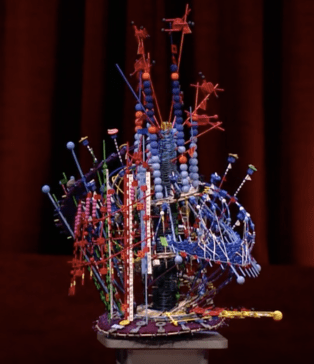
Every piece of her sculptures represents an element that can be translated into a musical note.
Miebach notes on how weather is an amalgam of systems that are invisible to us, so she uses sculpture and music to make this data visible and audible. She begins by extracting information from an environment using low-tech data-collecting devices. She then compares her information to weather information found on the internet which may come from weather stations to buoys.
When beginning translation she uses a woven basket, which is made up of both horizontal and vertical elements. When she assigns values to those elements she can use the changes the values to create the physical form.
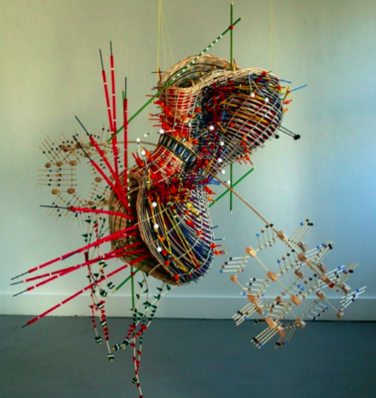
Her sculptures most importantly reveal relationships between elements that may not be seen in two-dimensional graphs.
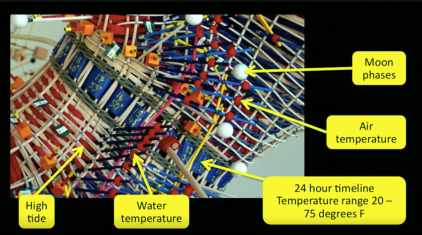
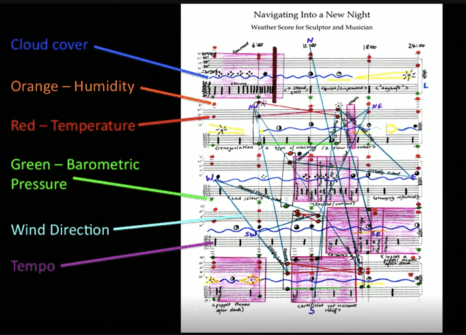
Miebach says that her work challenges what kind of visual vocabulary belongs in the world of art versus science. Her sculptures can be placed in an art museum and be seen as a sculpture, but it can be placed in a science museum and become a three-dimensional visualisation of data. She also likes how her work can become an entry-way into the complexity of science, saying that was her way into it.
This talk showed an interesting and different way data could be visualised and interpreted. In this example Miebach’s visualisations could be interpreted in the arts, as a part of science, and as a musical form as well. What I had taken from this talk was that we were not restricted on how we could visualise our data, as long as it can be read and interpreted and have meaning.

