This week’s lecture pod was a TEDTalk done by David McCandles done at TEDGlobal in 2010.
He introduces the talk saying that in today’s day and age we are all suffering from information overload, and that a solution to that is by using our eyes; by visualising information we can physically see patterns and connections, and design the information so it can tell a story.
The phrase “data is the new oil” is put out, which views data as a resource we can shape into new innovations that can be mined very easily. McCandles transforms it into “data is the new soil“; he sees it as a “fertile, creative medium”.
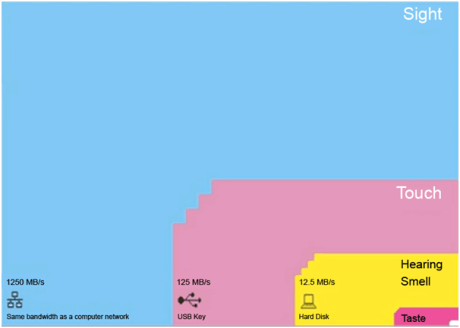
He introduces the idea that we are all visualisers and that we demand a visual aspect to our information. He was curious about the idea of how effortlessly we are able to read visualisations and it led him to the work of a Danish physicist called Tor Norretranders, who converted the bandwidth of the senses into computer terms.
Afterwards he talks about military budgets around the world. He presents on visualisation that shows that although the USA has the biggest budget, when other factors are introduced such as GDP and the number of soldiers, it drops down in ranking.
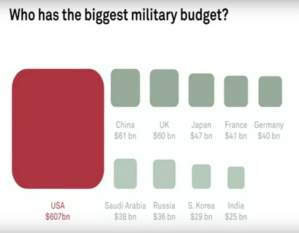
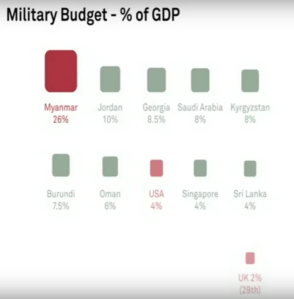
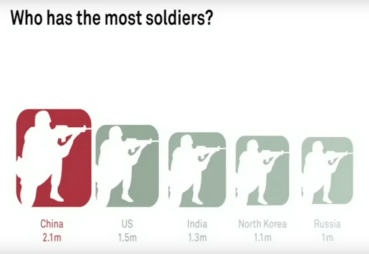
Suddenly, China is seen as having the largest army ready to deploy at any given moment, but when considering the fact China has a large population McCandles changes the data to the amount of soldiers per 100 000 people.
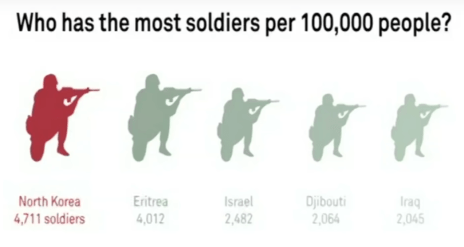
When population is considered North Korea is on top and China drops to 124th place. McCandles emphasises the importance of combining relative data to view the whole picture to alter our perspective. As said by physicist Hans Rosling, “Let the data set change your mindset.”
This TEDTalk was important in showing how stories could be made through data, and how a wider perspective can be seen when multiple data figures are considered. This is how we can create meaningful datasets.
Images:
McCandles, D (2010). The beauty of data visualization [Video file]. Retrieved August 30, 2019, from https://www.ted.com/talks/david_mccandless_the_beauty_of_data_visualization

